

The greatness of OpenCode: Once you use it, you can't go back.
#SRGThe Service Reliability Group primarily provides comprehensive support for the infrastructure surrounding our media services, focusing on improving existing services, launching new ones, and contributing to open-source software (OSS).
This article explores the benefits of OpenCode, an AI tool written in TypeScript, by examining its flexibility in processing across models, addressing issues with response speed and rate limiting, and enabling developers to maximize productivity without interrupting their thinking process.
In recent years, AI-powered coding support tools have been evolving rapidly.
OpenCode is more than just a CLI tool; it offers multiple interfaces, including a Desktop App and a Web UI (opencode web).
Rapidly growing OpenCodeProviders supported by OpenCodeI've also been involved in the standardization of Agent Skills.Outstanding rendering speed and responsivenessPlan ModeA feature that automatically switches models depending on the task.Session sharing featureSubagents used automaticallyNative support for LSPModel switching and assets that do not halt developmentAbout OpenCode and third-party subscriptionsAnthropicOpenAI subscriptionGitHub Copilot subscriptionAntigravity subscriptionIn conclusion
Rapidly growing OpenCode
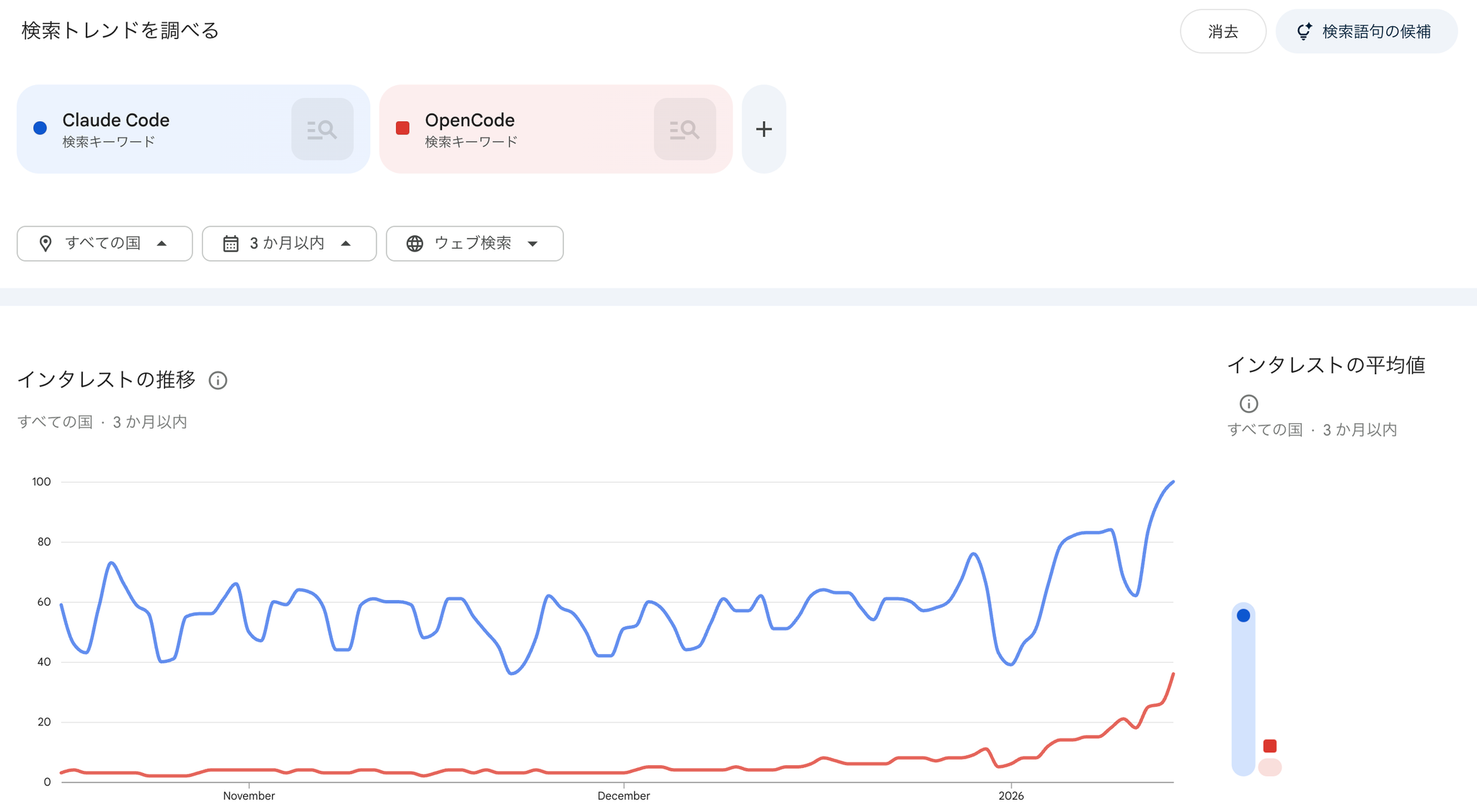
According to Google Trends, the number of searches has been increasing rapidly since 2026.
With nearly 70k stars, it's safe to say that this is a tool that's gaining momentum right now.
In this article, I'll delve into the reasons why, after using this tool daily for about three months, I feel like "once you use it, you can't go back."
Providers supported by OpenCode
- OpenCode Zen (a pay-as-you-go service provided by OpenCode)
- OpenCode Black (a subscription service offered by OpenCode)
- 302.AI
- Amazon Bedrock
- Antigravity(Google)
- There are some important points to note, which will be explained later.
- Anthropic
- There are some important points to note, which will be explained later.
- Azure OpenAI
- Azure Cognitive Services
- Baseten
- Cerebras
- Cloudflare AI Gateway
- Cortecs
- DeepSeek
- Deep Infra
- Fireworks AI
- GitLab Duo
- GitHub Copilot
- Google Vertex AI
- Groq
- Hugging Face
- Helicone
- llama.cpp
- IO.NET
- LM Studio
- Moonshot AI
- MiniMax
- Nebius Token Factory
- Ollama
- Ollama Cloud
- OpenAI
- OpenCode Zen
- OpenRouter
- SAP AI Core
- OVHcloud AI Endpoints
- Scaleway
- Together AI
- Venice AI
- Vercel AI Gateway
- xAI
- Z.AI
- ZenMux
- Custom provider
It's hard to find something that *isn't* compatible; we support so many things.
I've also been involved in the standardization of Agent Skills.
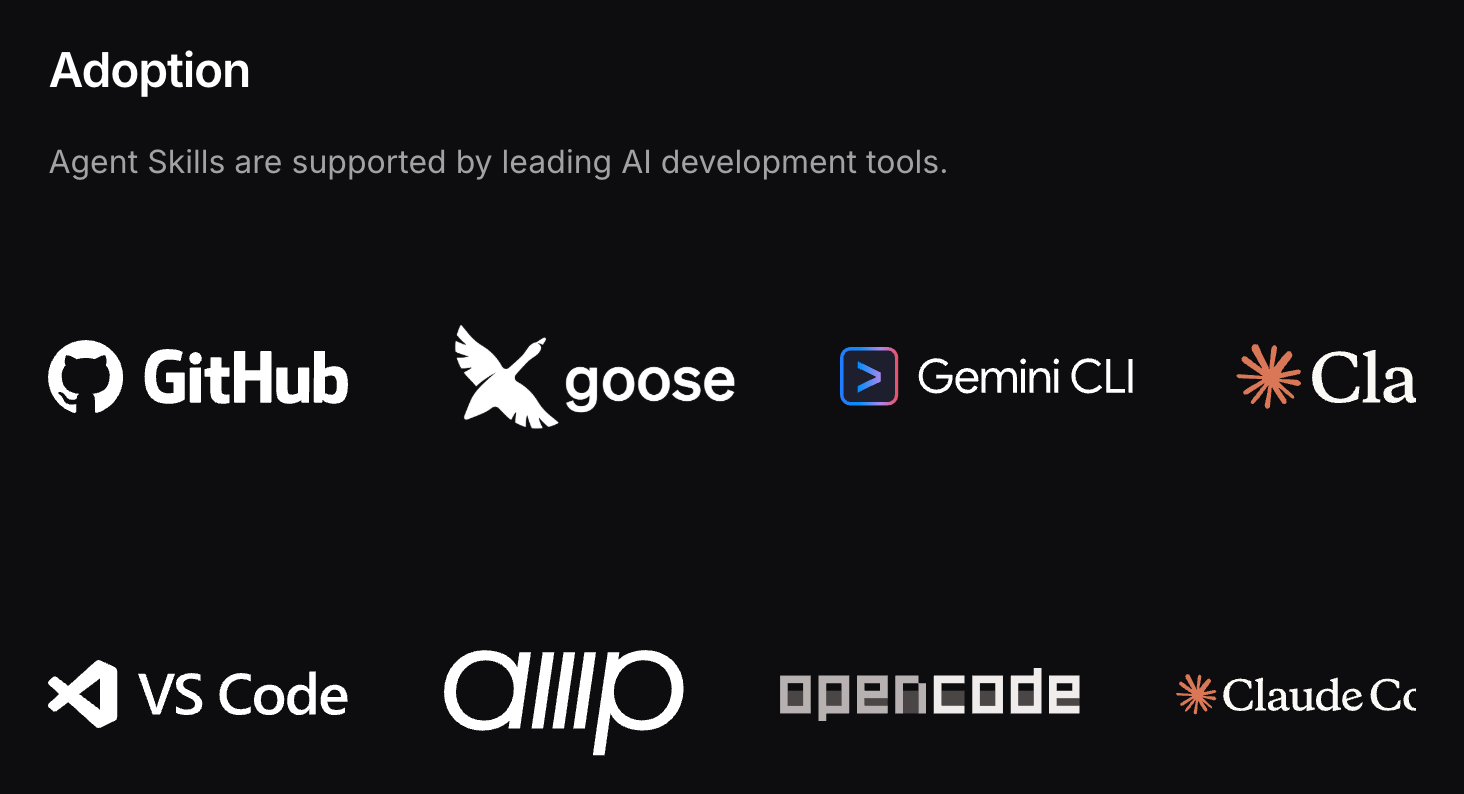
OpenCode's name is just as fitting as GitHub, Gemini, and Claude.
OpenCode is becoming that popular overseas.
Outstanding rendering speed and responsiveness
The first thing that surprises you when you start using OpenCode is its speed.
Among the many AI agent tools available, OpenCode's rendering speed and response speed are outstanding.
For example, even when using the same Anthropic Opus 4.5 as the backend model, OpenCode feels noticeably faster than the official Claude Code.
This is due to the highly efficient internal processing.
In packages/console/app/src/routes/zen/util/provider/anthropic.ts, we've added cache control when translating requests to Anthropic.
The Terminal User Interface (TUI) behavior on the terminal is also very smooth, with code generation and suggested modifications flowing seamlessly.
Plan Mode
It also features a crucial "Plan Mode" in the development workflow. By switching to this mode with the Tab key, you can first consult with the AI to finalize the implementation plan before writing any code.
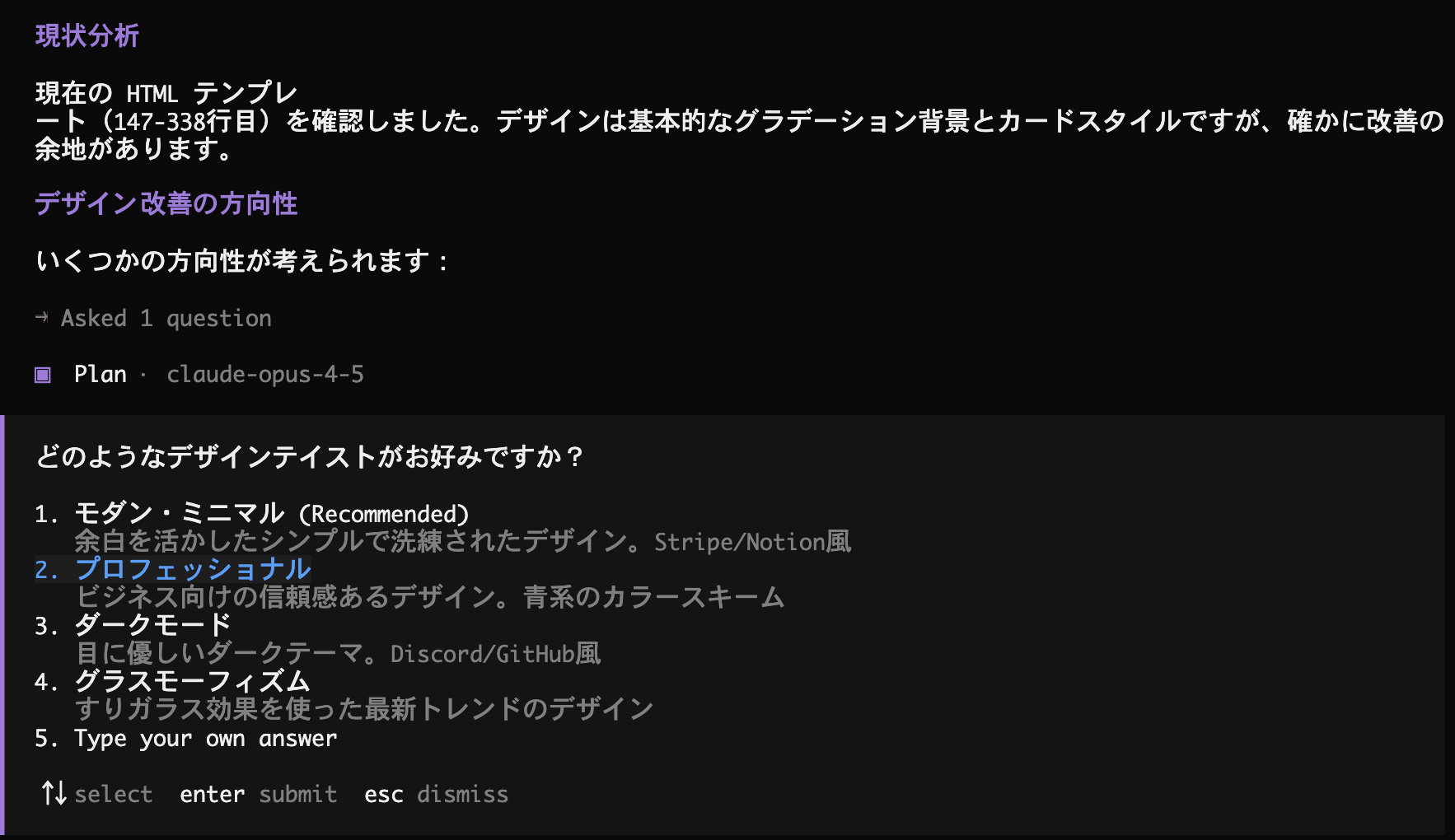
With the update on January 15th, the files from the Plan phase are now written to a file, allowing you to review the contents and, if there are no problems, automatically switch from Plan mode to Build mode and begin implementation.
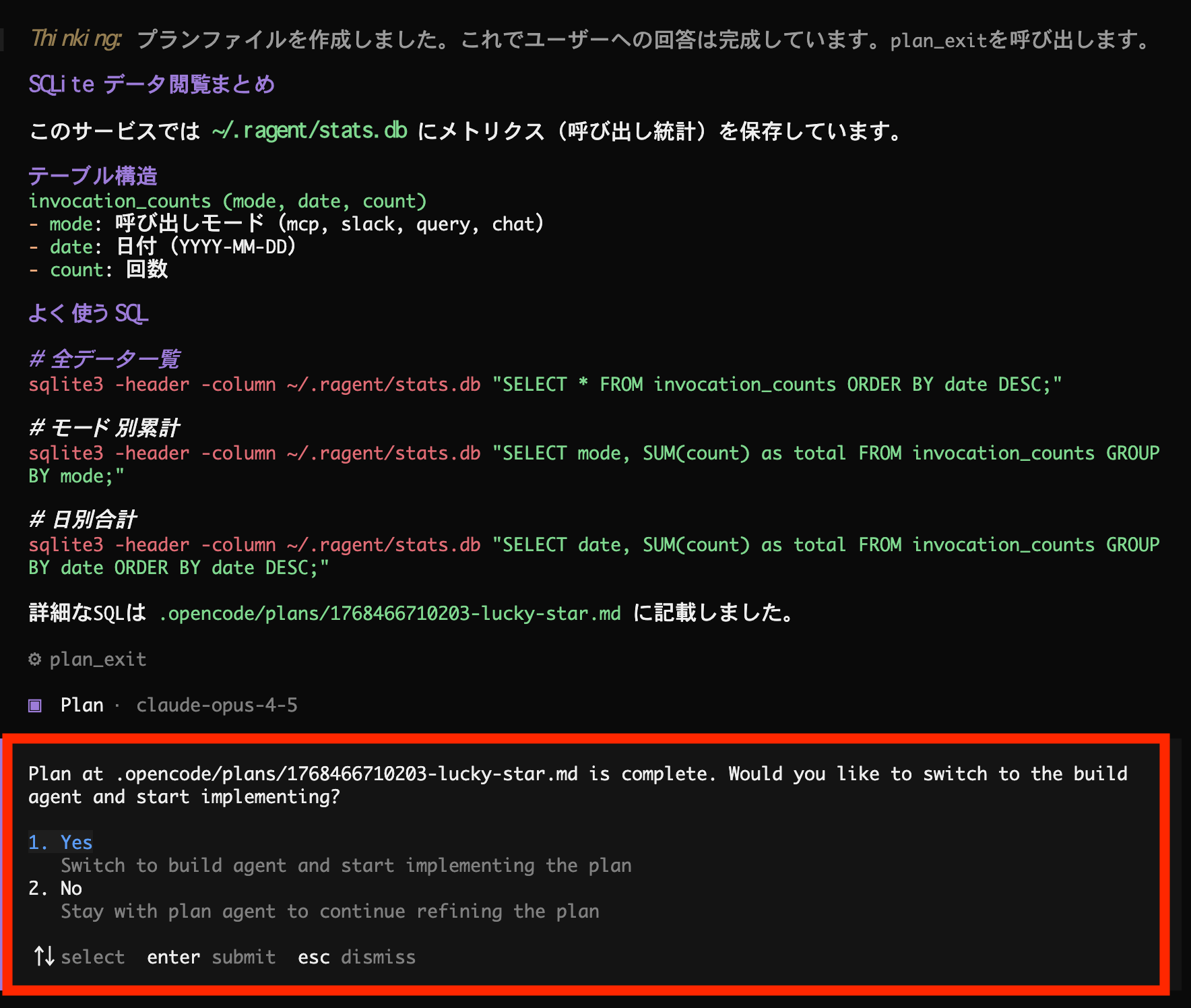
The ability to run this "thinking" and "implementation" process at a stress-free pace dramatically improves the development experience.
A feature that automatically switches models depending on the task.
There are two types of tasks in OpenCode:
- General (task to be implemented)
- Explorer (for lightweight tasks such as file searching)
One of the good features of OpenCode is its ability to automatically use a lightweight model depending on the task.
getSmallModelFor example, if you are using OpenCode with a github-copilot subscription, "gpt-5-mini" will be used preferentially for Explorer tasks.
I think this is a very good feature in terms of rate limiting and speed.
Furthermore, the model selected here can also be defined by the user.
Session sharing feature
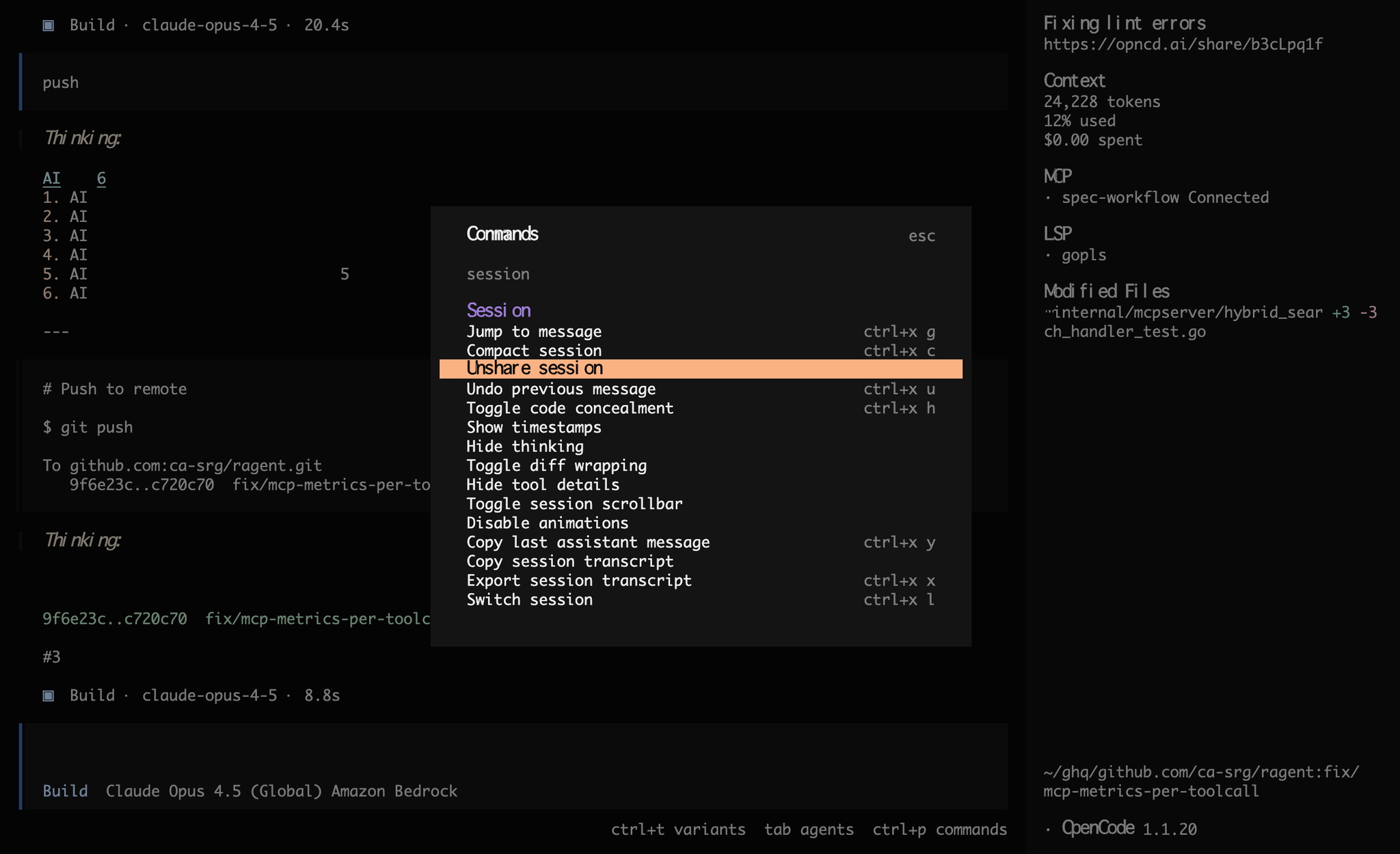
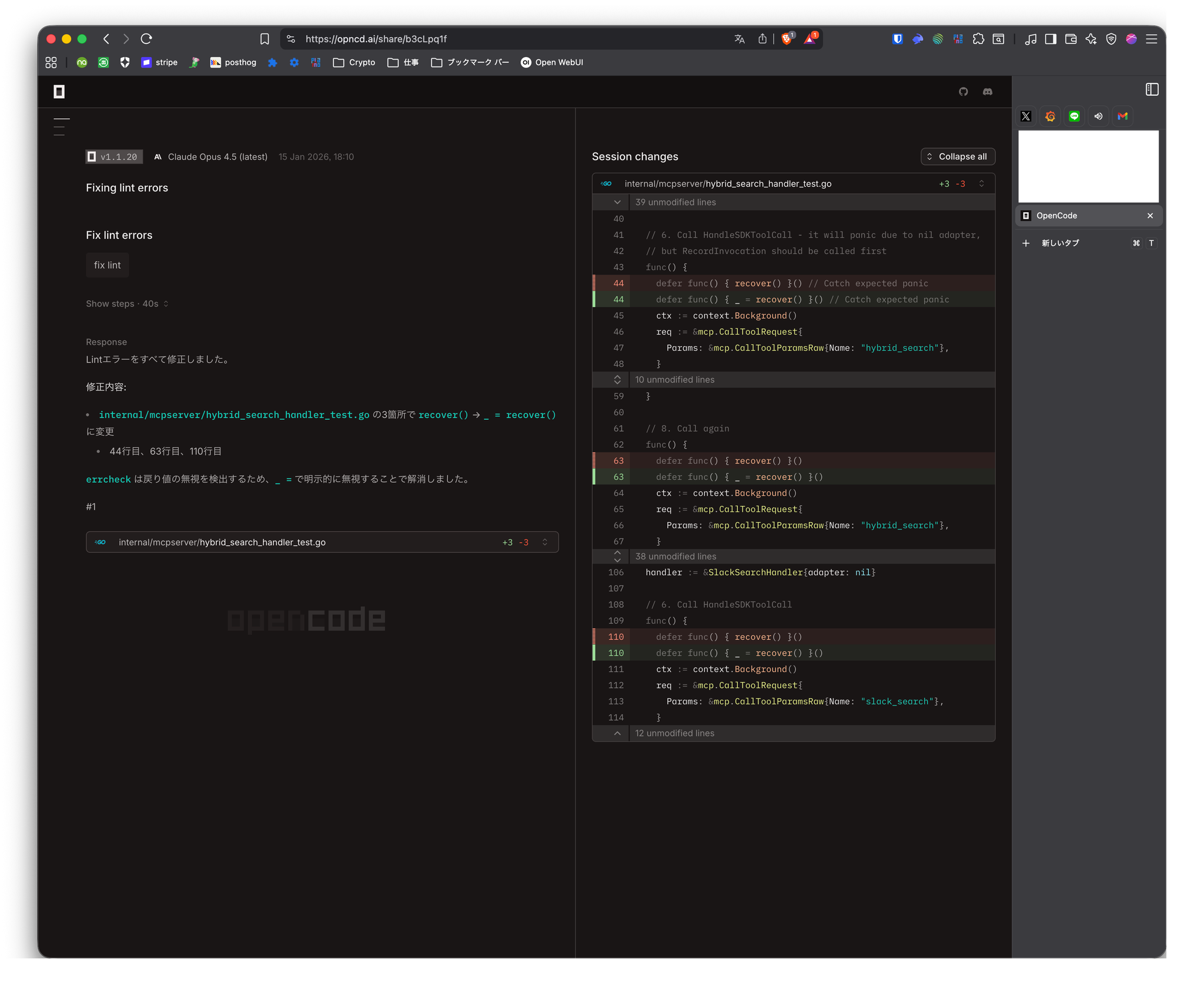
Pressing Ctrl+P opens a command list and has a feature to share the current session. Using this feature can potentially facilitate discussions among developers and make debugging Agent Skills, memory, and MCP easier.
Subagents used automatically
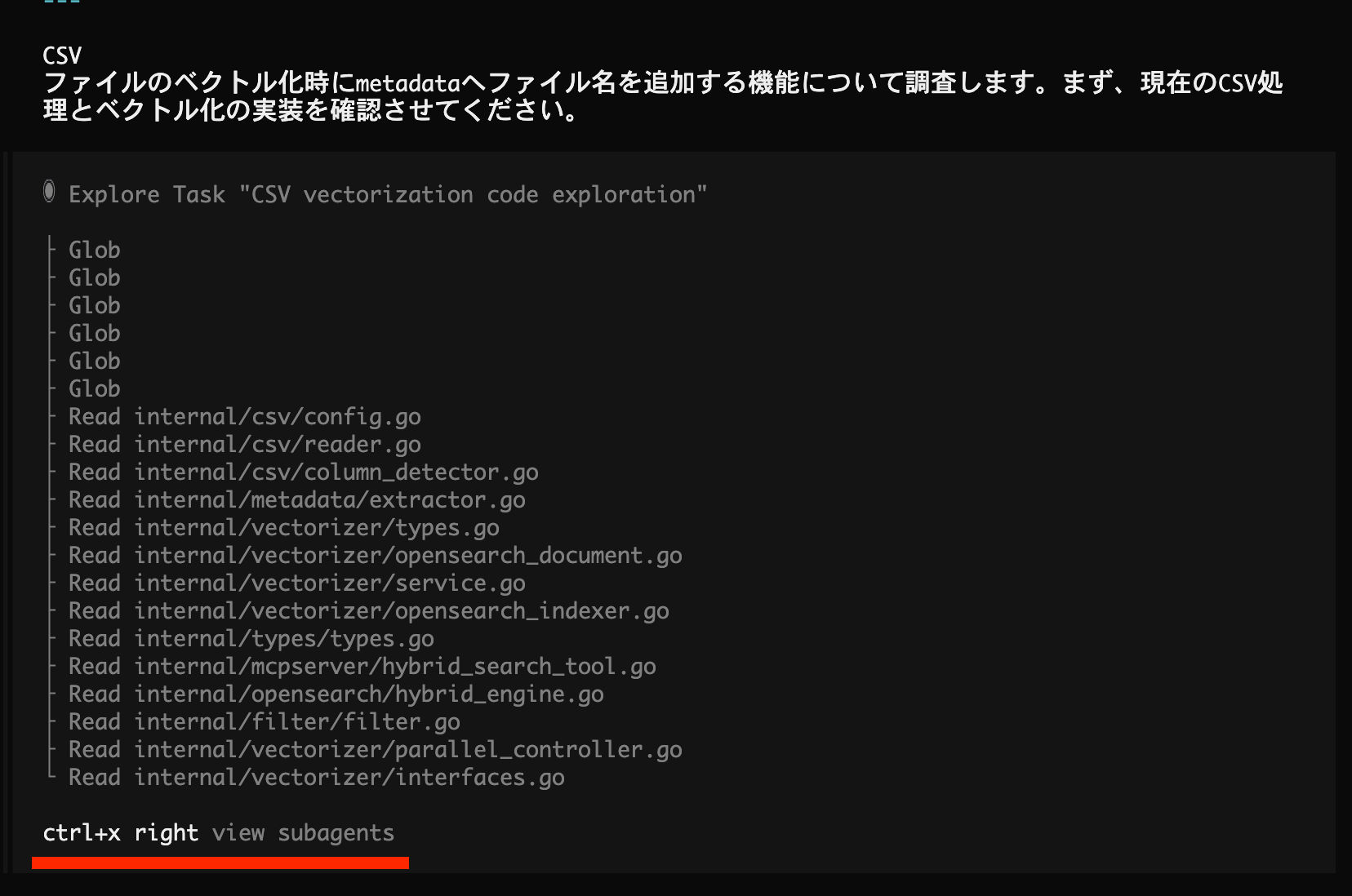
While this feature is now also included in Claude Code, OpenCode automatically uses subagents to perform file searches and other tasks when exploring the codebase even faster.
Because it automatically uses subagents appropriately, there's no need to write anything to memory or elsewhere.
Native support for LSP
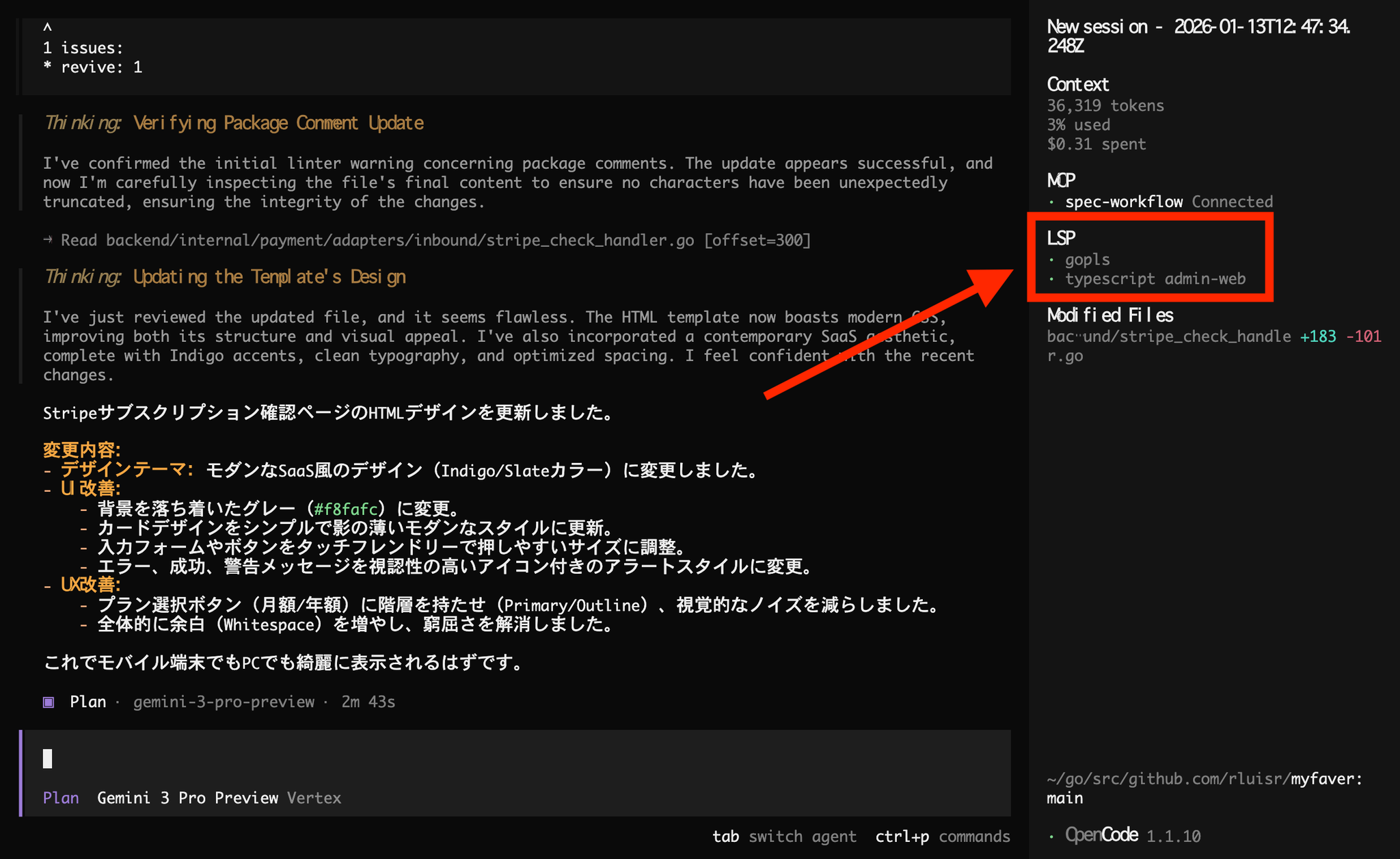
Unlike Claude Code and similar tools, OpenCode automatically applies and utilizes LSPs if they are installed locally.
What I want to highlight here is that, despite being a monoreport, LSPs (Language Skill Programs) are used for each language.
Model switching and assets that do not halt development
When you're engrossed in development, one of the things you want to avoid most is being interrupted by rate limits (usage restrictions).
Almost everyone has experienced the frustration of seeing the error message "429 Too Many Requests," which completely shuts down their thinking process.
OpenCode has a very elegant solution to this problem.
/models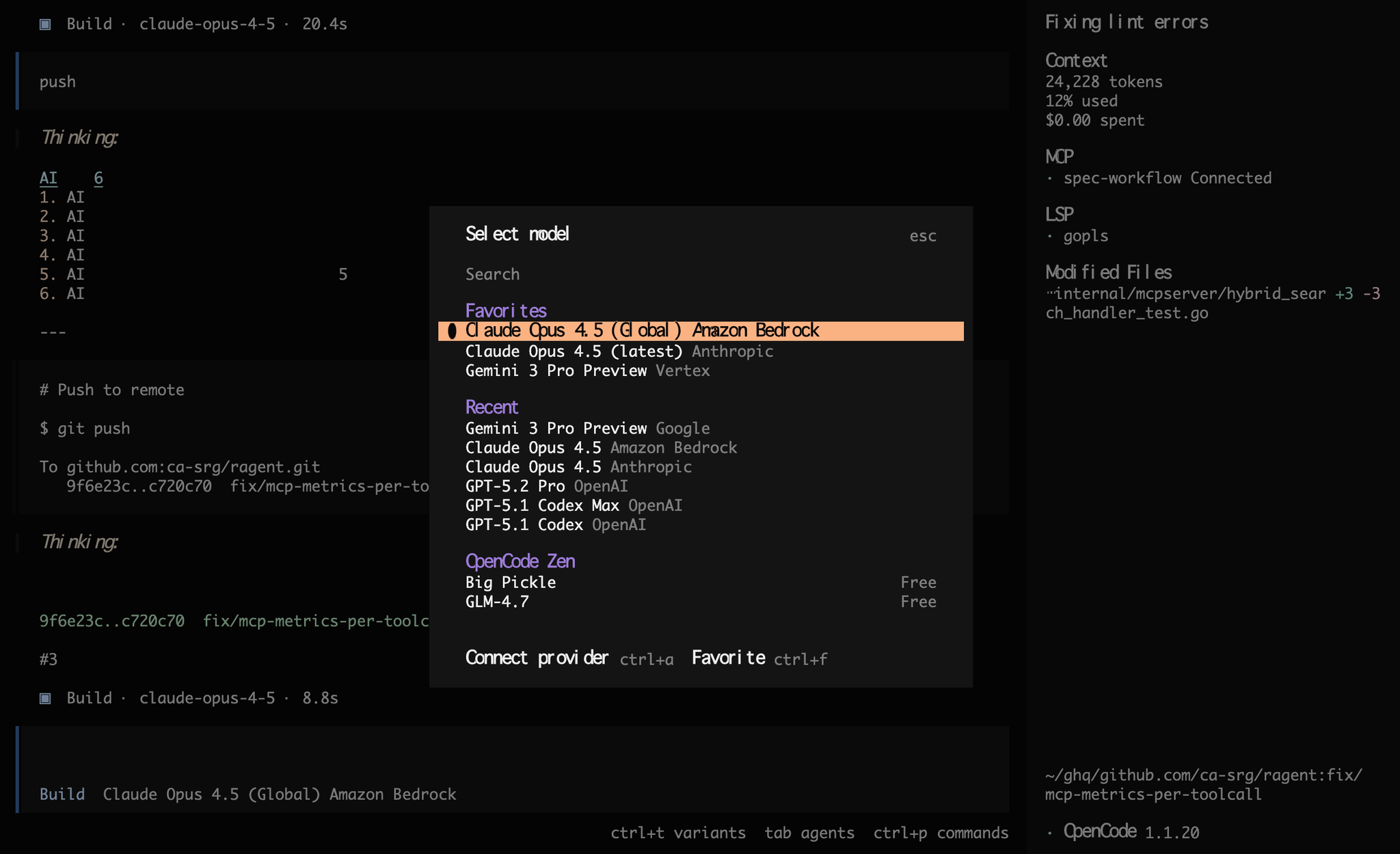
Even if the main model you're using reaches its rate limit midway through your work, you can switch to a different model or provider by simply entering a command, allowing you to continue working while maintaining context.
This makes it easy to continue working on OpenCode while keeping Agent Skills and Rules intact.
While OpenCode allows users to configure and use their own OpenAI and Anthropic API keys, it also offers managed connection options such as Zen and Black, provided by the tool itself.
Zen is a service that provides access to a list of models validated and curated by the OpenCode team, eliminating the hassle of setting up individual contracts and providing a stable development environment.
On the other hand, Black is positioned as a subscription service to meet more advanced needs, allowing users to focus purely on coding without being burdened by API management or limitations.
I've recently heard that Codex is good for code reviews, but with OpenCode, you don't need to switch between CLIs; you can just switch using `/models`.
About OpenCode and third-party subscriptions
To put it simply
- Using a Claude subscription violates Anthropic's terms of service.
- Use with APIs, GitHub Copilot, Bedrock, or Vertex.
- OpenAI subscription → OK
- GitHub Copilot subscription → OK
- Antigravity subscription → Unknown
This information is updated frequently, so this is current as of January 16, 2026.
Anthropic
Using Claude Code subscriptions through third parties such as OpenCode is prohibited.
OpenAI subscription
Unlike Anthropic, OpenAI is officially recognized.
GitHub Copilot subscription
This has also been officially recognized.
Antigravity subscription
I believe it will work fine with the Gemini API and Vertex, but its use with Antigravity subscriptions is unclear.
In conclusion
OpenCode is more than just "another AI CLI tool."
Its high-speed operation, flexible ecosystem spanning CLI, Desktop, and Web, and model management features that keep developers' workflows uninterrupted provide a level of comfort that, once experienced, makes it hard to go back to other tools.
Currently, it is being actively developed as open-source software, but due to its high level of completeness, it has the potential to become comparable to, or even surpass, paid commercial tools in the future.
For engineers who want to maximize their productivity in their daily coding tasks, OpenCode is a tool worth trying right now.
SRG is looking for new team members.
If you are interested, please contact us here.